reckless generosity or heartless scrutiny. And thus, a false dichotomy became a lethal one. In a certain prosperous land, a king was moved by sympathy for the poor. Knowing that not all of his subjects were charitable of their own accord, he decided to centralize and mandate kindness. He built a great Alms-House to be filled with gold. “My kingdom will provide for its neediest!” The well-meaning king declared. “I will tax the people and help them show charity. Let every widow, every orphan, elder, and beggar come daily and ten silver coins shall be given them, so that none among the helpless shall beg bread. Let us set an example for other nations, and allow no one among the vulnerable to go hungry in our kingdom!”
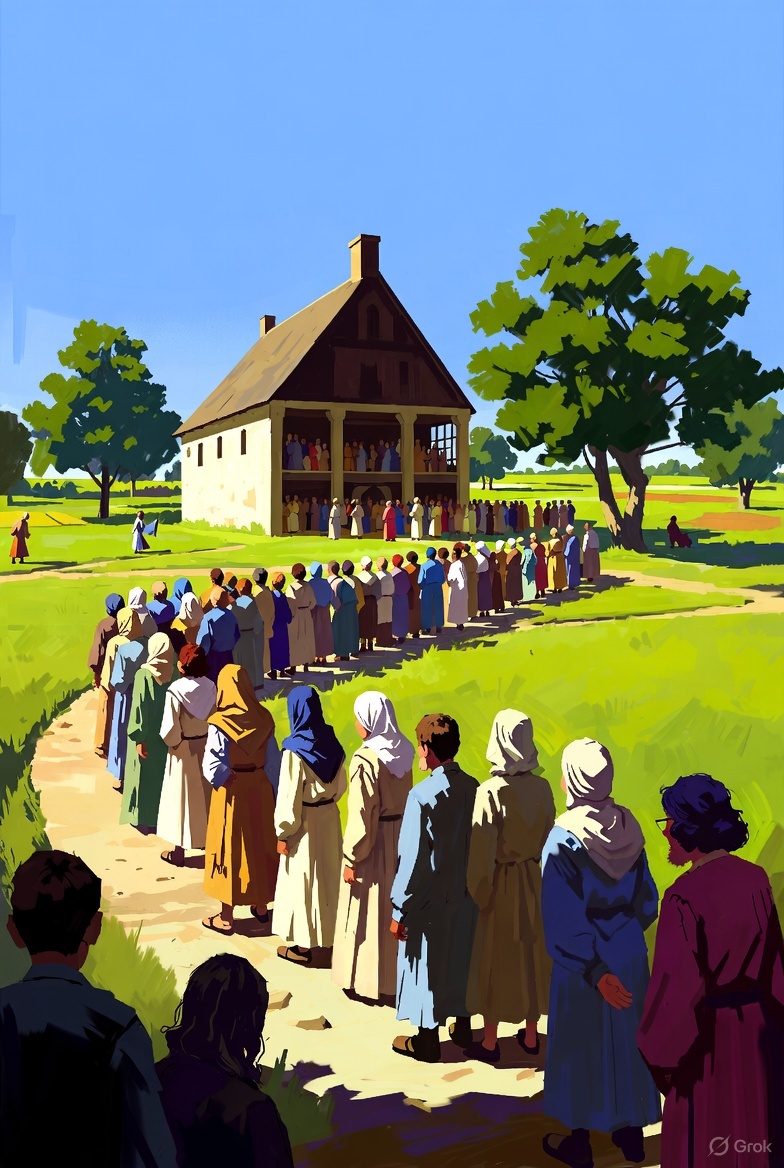
The doors opened and the needy came, at first rejoicing. But soon the cunning learned that the decree had no gatekeepers. Word spread quickly. Soon sturdy men came, feigning frailty. Women came with clever tongues and as many children as they could gather, servants of merchants were sent in rags. Brothel-keepers dressed their girls as mourning widows. Even foreigners crossed the border for the promise and joined the line. They all learned the right words, the right tears, the right stories. Within a year, nine in ten coins were vanishing into hands that were neither widowed, nor orphaned, nor aged.
At last a stern councilor named Malachi rose before the throne. “Majesty, your treasure has become plunder. The coffers bleed empty while the helpless still hunger. Shut the doors forever. Let every man earn his bread by sweat, and stymie the abuse once and for all.”
Immediately another councilor named Jonathan leapt to his feet. “Malachi would starve the fatherless!” He cried. “He hates every trembling widow and starving child, and has no charity in his heart! If the doors close for even one day, babes will die in the gutters and grandmothers will eat refuse. Better that half the treasury be handed to liars than to let one needy soul perish!”
The council split into two furious camps, the Closers and the Open-Handers.
The first shouted: “Close it forever! Charity that is both forced and unlimited is theft from the diligent!”
The other thundered back: “Keep it open without condition! To close it is to sentence the poor to death.”
Day after day the two sides hurled anathemas, each painting the other as monsters. The population, hearing only two extreme positions presented, took sides and quarreled in the streets. Division and animosity grew in the kingdom like weeds in a garden. “Mercy!” Cried one neighbor. “Justice!” Cried the other.
On they raged. Yet amid the shouting in the great hall, a few humble voices tried to be heard.
First came Martha, a widow from the potter’s quarter who had once received the king’s silver when her husband died, but was now a seamstress. She stood trembling, clutching her shawl. “Have we forgotten the word of the Lord?” she asked. “James the Apostle wrote, ‘If a brother or sister is naked and lacks daily food, and one of you says to them, “go in peace, be warm and well fed,” and you do not supply their bodily needs, what is the good of that? Pure religion is this: to visit orphans and widows in their distress.’ Shall we not rather appoint seven men of good reputation, full of the Spirit and wisdom, as the church once did, to oversee the daily distribution so that no widow is neglected and no liar enriched?”
Both sides turned on her at once.
“Shortsighted nitwit!” cried the Closers. “You’d have us incentivize the idle forever!”
“Heartless prude!” roared the Open-Handers, “You would interrogate the hungry at the very door of mercy! Why don’t you just kick them while they’re down?”
Before the echoes died, old Caleb the vineyard-keeper rose, weathered and stoop-shouldered. “My lords,” he said quietly, “The Stoics teach that we are to help others, but never in a way that harms them more than it helps. A man who is given bread he did not earn today will demand it tomorrow, and curse you the day it is withheld. Teach the youth a trade, set the able-bodied to honest apprenticeship with room and board, and limit aid to those truly unable to work. Then generosity strengthens both giver and receiver, and the kingdom endures.”
The chamber erupted again.
“Cold-blooded philosopher!” shouted the Open-Handers. “You would indenture the poor like slaves!”
“Backward rustic!” yelled the Closers. “We made our own way. So must they!”
So the widow’s plea for discerning, church-ordered charity, and the old man’s call for restorative, dignity-preserving labor were swallowed by the clamor. Mercy without justice and justice without mercy each claimed the field, and no one noticed that the two silenced voices, taken together, had spoken the very wisdom that might have saved the realm.
Other small voices spoke that night… and were similarly drowned.
“We could give the widows, orphans, and crippled a small token, to be renewed each year by a local priest or sheriff that knows their case.”
“Bureaucratic tormentor!” Screamed the Open-Handers. “You would make the grieving widow beg a priest’s stamp and risk starvation if he is slow or cruel!”
“We could give charity-tax exemptions to strong families and faithful congregations already caring for their own poor, now paying triple to support both the poor in their own circles and the charity tax at large.”
“Clever accounting trick!” Bellowed the Closers. “You would let every merchant declare his idle brother-in-law a family dependent, and avoid taxation altogether!”
“We could set modest time limits for the able-bodied and the young, giving a season of grace after misfortune, then requiring work or apprenticeship.”
“Heartless clockmaker!” Shrieked the Open-Handers. You would set a timer on human suffering! The very week a man’s grace expires, his child starves. So much for the milk of human kindness!”
Thus the same voices were condemned as cruel taskmasters by some, heartless misers by others; and any voice calling for limits, discernment, or mutual obligation was silenced by the only two positions loud enough to be heard. Sadly, neither side ever convinced the other. The king, kind but not strong, listened to all and did nothing. The treasury emptied, the liars grew fat, and the helpless remained helpless.
But soon, too few were paying in to sustain the coffers. As the tax continued to rise to meet the number of claimants, and as the number of givers was slowly outpaced by the takers, all sunk together into deeper poverty. Within a matter of years, the once prosperous nation was no longer prosperous. The king’s once renowned mercy, not metered with discretion and justice, became a byword. “Ah” a neighbor would say, as a man spent his last silver. “You’ve met the King’s mercy.” Thus did a kingdom perish when it believed the only choices were reckless generosity or heartless scrutiny. And thus, a false dichotomy became a lethal one.